Highly sustainable
A renewable feedstock of palm-tree waste and a circular-economy model that turns agricultural residue into industrial products.
Atheel is not a traditional industrial project. It is a Saudi company converting the Kingdom's renewable resources into recurring industrial value.
Our story
Atheel was founded in Riyadh in 2020 around a simple question: why should the Kingdom import its pallets when it holds one of the world’s most abundant renewable wood-fibre resources — palm-tree waste?
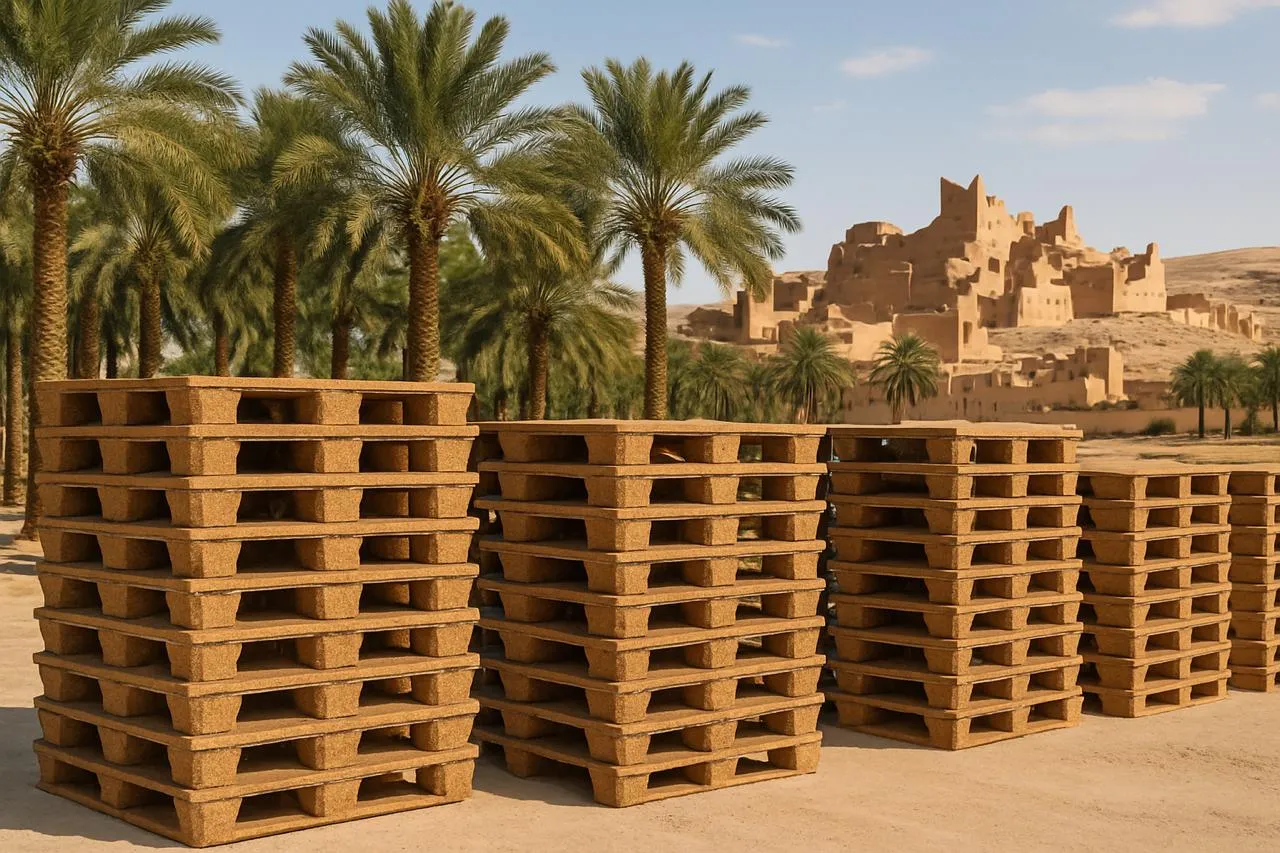
From that question came our first venture: a complete presswood pallet production line in Al Kharj Industrial City that processes agricultural waste into a load-bearing industrial product built to international standards.
And the pallet is only the beginning. The same manufacturing platform can produce other essential products as the market demands — wooden boxes, furniture components — making Atheel a materials platform, not a single-product factory.
Our commitment
A renewable feedstock of palm-tree waste and a circular-economy model that turns agricultural residue into industrial products.
A product manufactured in the Kingdom, strengthening local content and contributing to economic diversification under Vision 2030.
A high-heat, high-pressure process that eliminates bacteria and insects, delivering a hygienic way to move goods.
The journey
Atheel set out to pioneer industrial pallet production from palm waste in the Kingdom.
Engineering design, production-line procurement, and core construction of the Al Kharj facility were completed in stages.
Per the investment memorandum, the facility reached 95% readiness with capital and technical assets in place.
Targeted start of commercial production per the memorandum. [Atheel confirmation required: current operational status]
Vision 2030
Atheel’s model serves three national priorities at once: strengthening local content, diversifying the industrial economy, and leading the transition toward a biomass-based circular economy. The Saudi government actively supports green industry — and recycled wood is among its most sustainable, lowest-cost raw materials.
Substituting a Saudi product for roughly $21 million in annual imports.
Seeding a new generation of transformation industries built on renewable resources.
Converting palm biomass into industrial and logistics assets.
A palm-waste presswood pallet, molded in one piece and ready for export.