Waste isn't the end of the cycle. It's the start.
Atheel's model is circular by design: a renewable resource, and a process that even recycles its own end-of-life products.
The resource
A green, abundant, local feedstock
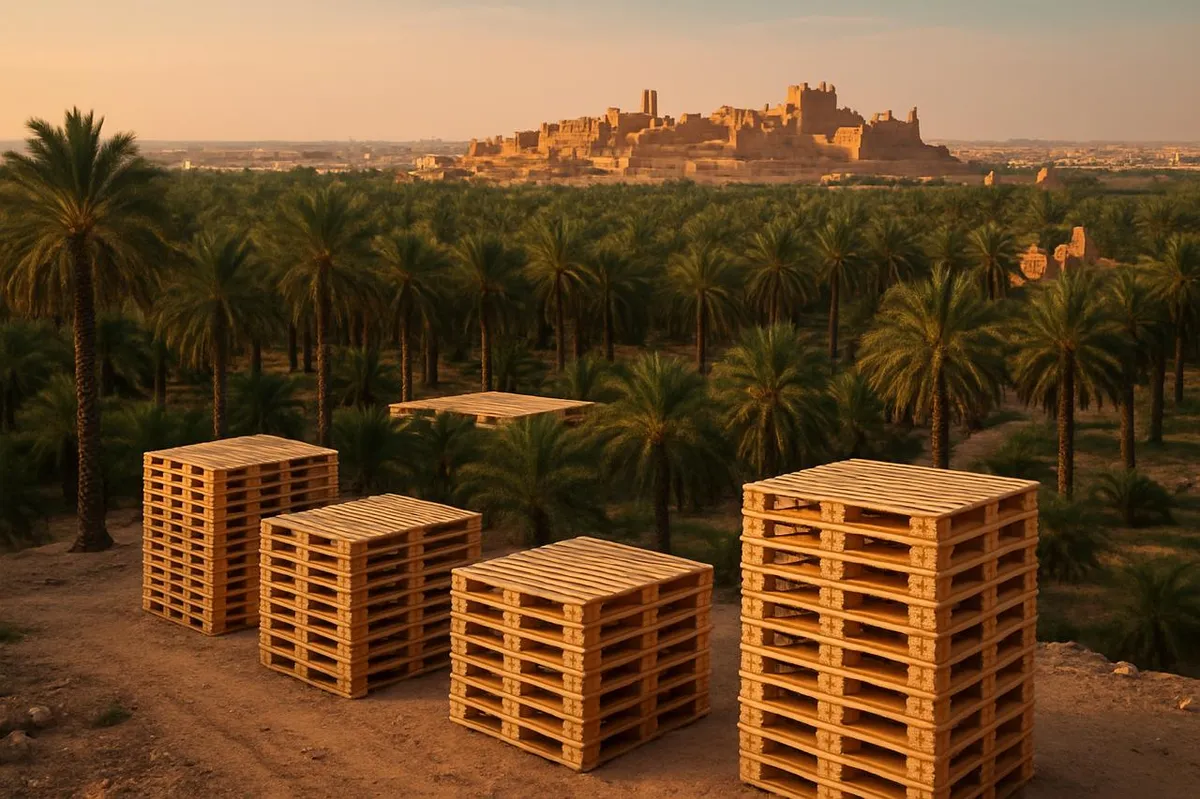
A study published on MDPI estimates Saudi Arabia generates some 200,000 tonnes of palm-tree waste. Rather than letting that biomass become an environmental burden, Atheel converts it into useful products that compete with conventional alternatives.
Wood recycling is also the cheapest, most sustainable raw material for green industry — a sector with clear government support in the Kingdom.
The loop
A closed loop, farm to farm
Palm waste
Trunks, branches, and fronds collected from farms instead of being burned or landfilled.
Manufacturing
Chipping, drying, blending, and hot pressing turn fibre into a load-bearing product.
Use
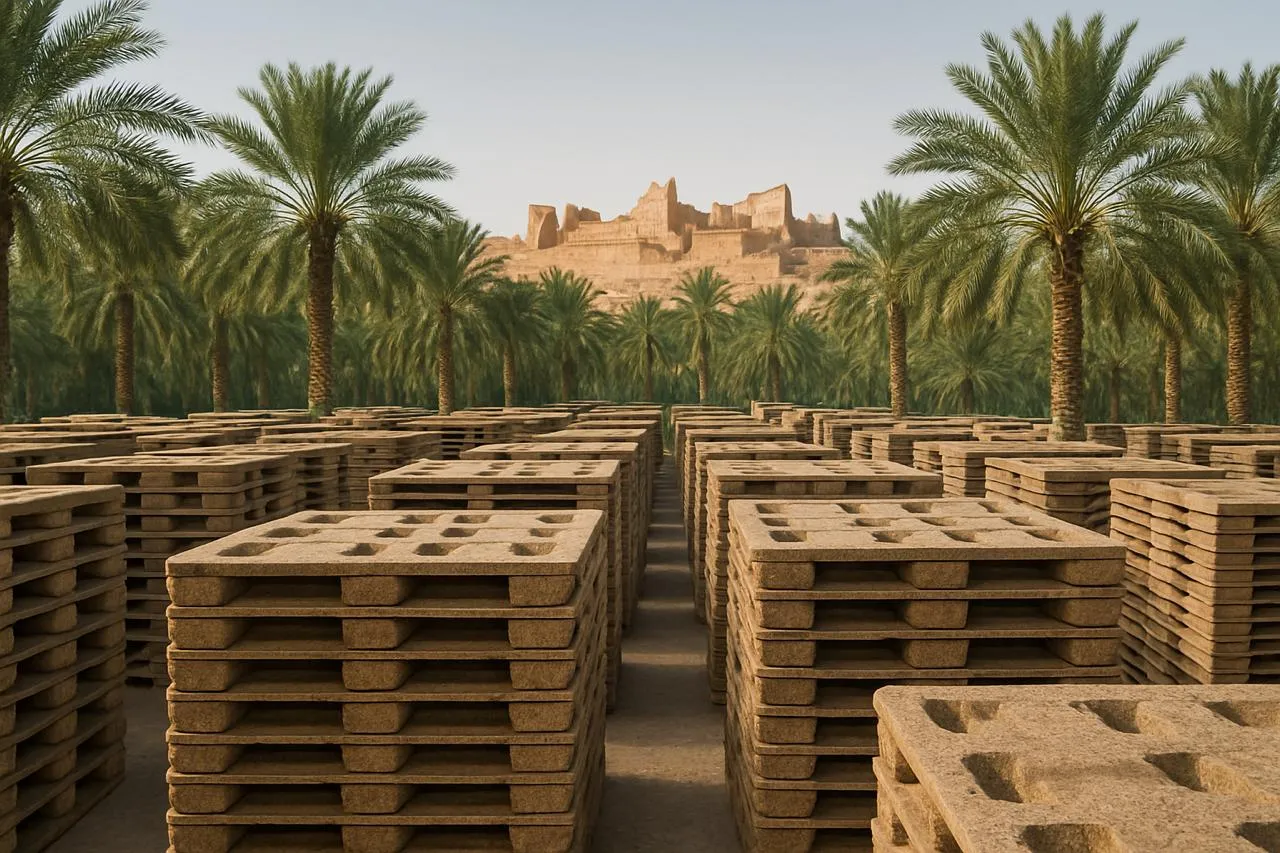
Hygienic, export-ready pallets serving supply chains at home and abroad.
Recycling
Our in-plant pallet crusher turns end-of-life pallets back into raw material.
The impact
Sustainability that also serves the business
At Atheel, sustainability is an operating advantage, not a slogan: a low-cost, price-stable local resource; a product sanitised by its own manufacturing process with no fumigation required; and direct alignment with the Kingdom’s local-content and green-industry agenda under Vision 2030.
Looking for a more sustainable supply partner?
Talk to us about your environmental and logistics goals.